Imagine you buy an RTL-SDR and open SDR++.
Suddenly you see thousands of signals around you.
You see:
- FM Radio
- WiFi
- Bluetooth
- Aircraft signals
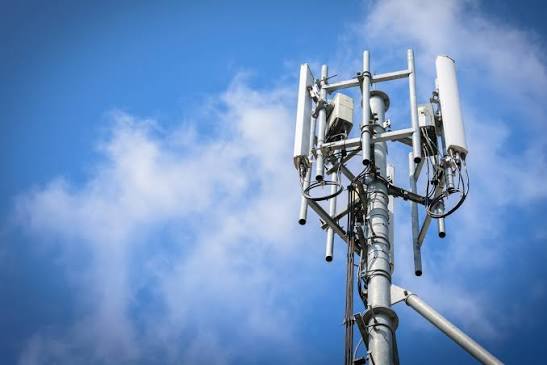
- Cell tower signals
- Garage door remotes
- Car key fobs
Now the question becomes:
How can thousands of devices talk at the same time without everything mixing together?
The answer is:
- Frequency
- Bandwidth
- Modulation
- Channels
Let’s understand these.
1. Frequency
Frequency means:
How many times a radio wave oscillates in one second.
Unit:
Hertz (Hz)
Examples:
- 100 Hz = 100 oscillations per second
- 1 MHz = 1 million oscillations per second
- 1 GHz = 1 billion oscillations per second
Technical Scenario
Your home WiFi operates at:
- 2.4 GHz
- 5 GHz
Your Bluetooth headset uses:
- 2.4 GHz
FM Radio:
- Around 88–108 MHz
4G LTE:
- Different bands depending on country
Each device is talking on different frequencies.
Think of frequency as:
The address where a signal lives.
When your SDR tunes to:
98.5 MHz
you hear one radio station.
When you tune to:
101.1 MHz
you hear another station.
Nothing magical happened.
You simply moved to another frequency.
What Happens Physically?
Radio station:
Audio<br> ↓<br>Transmitter<br> ↓<br>98.5 MHz carrier<br> ↓<br>Air<br> ↓<br>Your radioYour radio is basically saying:
“Show me everything happening at 98.5 MHz.”
2. Spectrum
Spectrum means:
All available frequencies.
Imagine looking at the entire radio world.
0 Hz<br>|<br>|<br>100 MHz<br>|<br>|<br>1 GHz<br>|<br>|<br>10 GHzThis entire range is called the RF spectrum.
Real Technical Example
Your city right now contains:
- FM Radio
- Police radio
- WiFi
- Bluetooth
- GPS
- Cellular towers
All operating simultaneously.
The spectrum is like a giant highway.
Different technologies occupy different parts.
3. Bandwidth
Bandwidth means:
How much frequency space a signal occupies.
Real Technical Example
Let’s say an FM station is broadcasting on:
98.5 MHzIt doesn’t actually use only:
98.500000 MHzIt spreads around that frequency.
Maybe:
98.4 → 98.6 MHzThe width of that occupied space is bandwidth.
Why It Matters
More bandwidth means:
- More data
- Higher speed
Less bandwidth means:
- Less data
- Lower speed
Example
Bluetooth:
Small bandwidth.
WiFi:
Much larger bandwidth.
Therefore WiFi can transfer far more data.